Chapter 14: Shadow City - Technical SEO
 Andrew MahoneyMay 21, 2026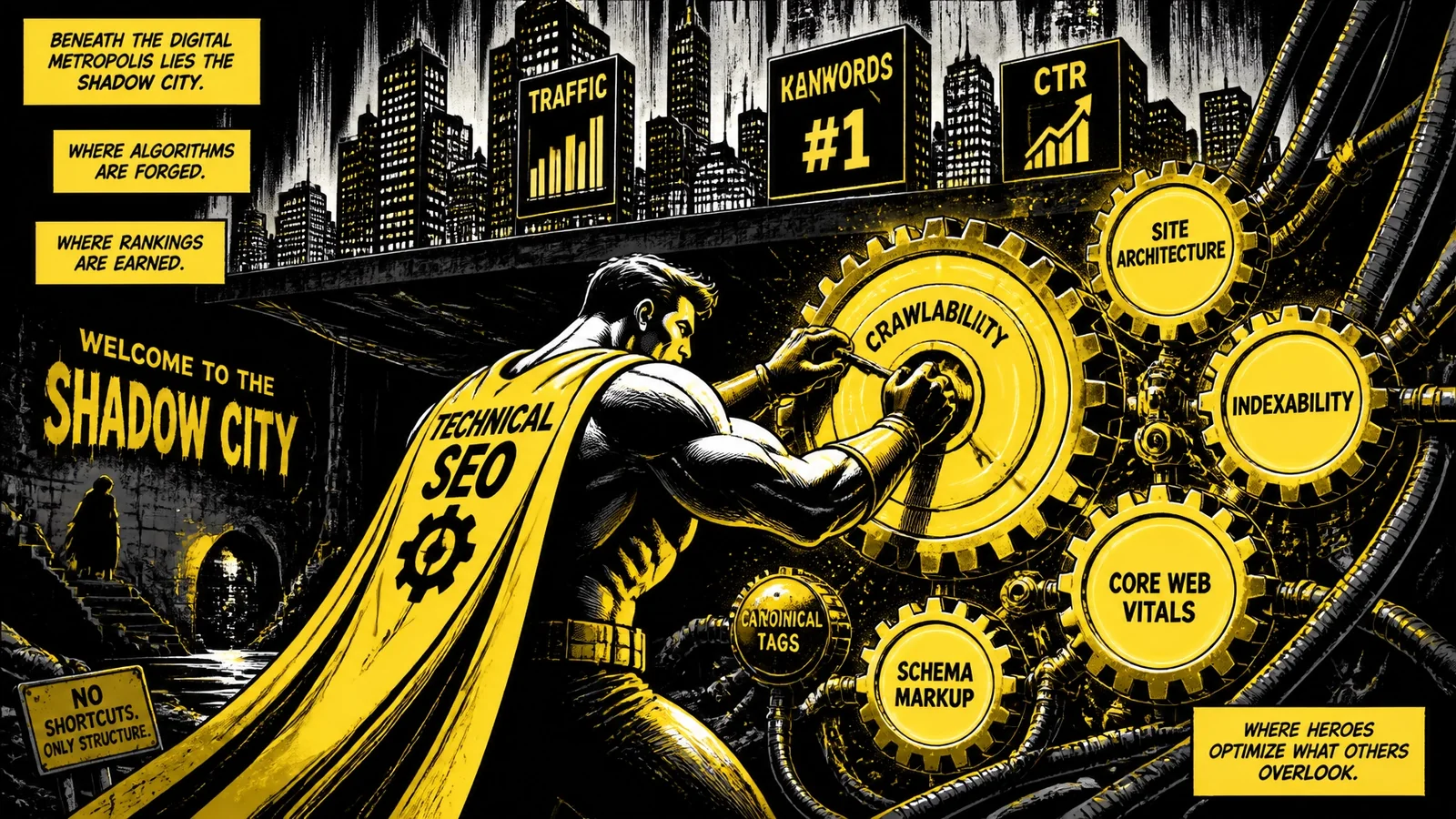
Welcome to the belly of the beast.
You've got the flashy costume (the branding). You've got the inspiring origin story (the copy). You've even got the secret hideout (the website). But beneath the surface of your shiny digital metropolis lies a dark, damp, and dangerous place we call Shadow City.
In the world of marketing, Shadow City is your website's backend. It's the labyrinth of code, the rusty gears of server response times, and the tangled wires of indexing. Most business owners are too afraid to go down here. They stay in the sun, polishing their logos, while the villains of Technical SEO are slowly dismantling their foundations from the inside out.
BAM! Not on our watch.
If you want to be a digital HERO, you have to be willing to get your cape a little dirty. You have to descend into the guts of your site and fix the machinery. Because if the Shadow City is crumbling, your website won't just fail to rank — it will vanish from the map entirely.
At 141 Creative, we don't just build pretty facades. We are the architects and the heavy-duty mechanics who keep the city running. Let's dive into the grime and start fixing the gears.
The 404 Sludge: Plugging the Leaks
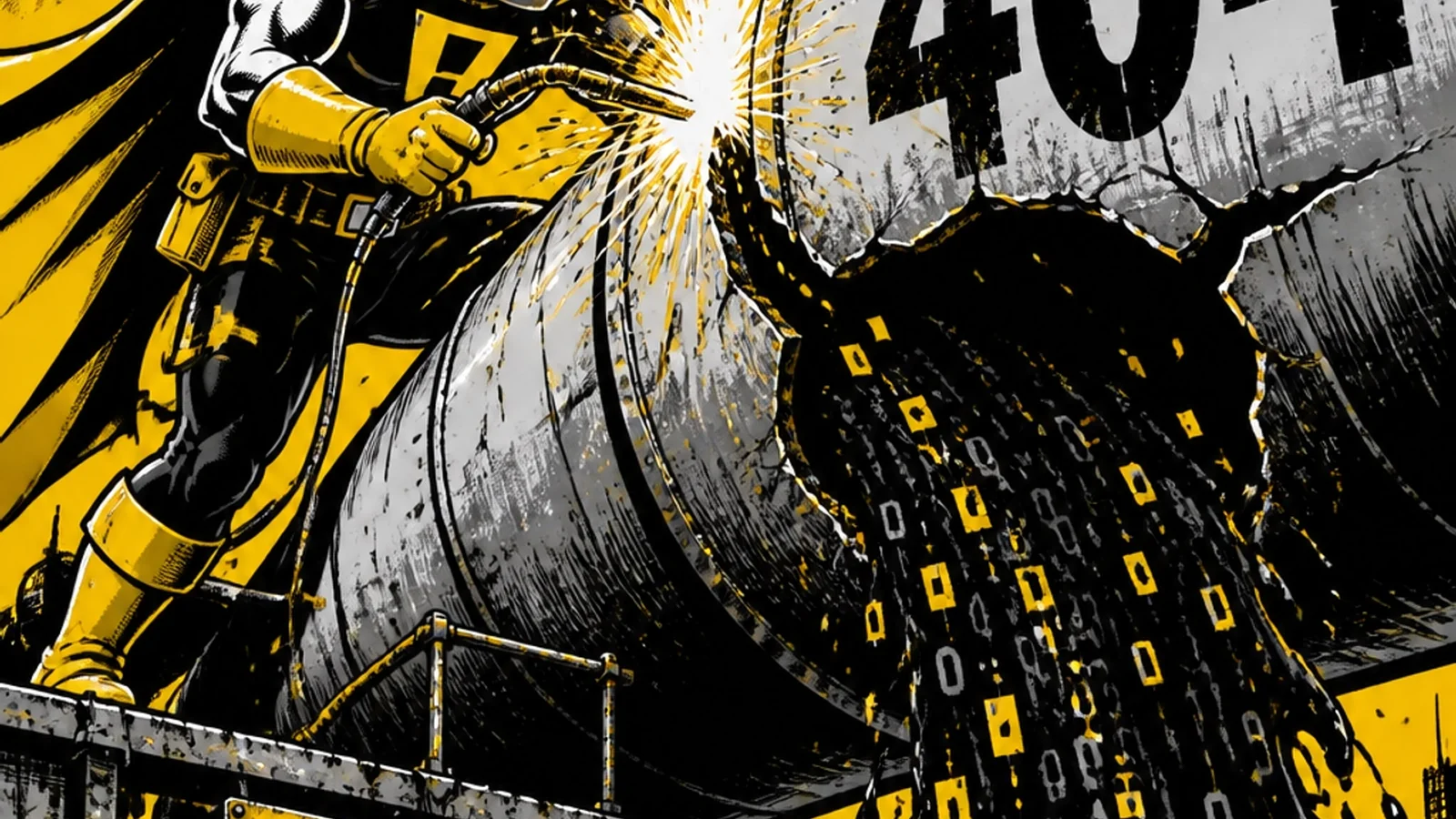
POW! You see that? That's a 404 error. It's a broken pipe spewing digital sludge all over your user experience.
Every time a user clicks a link and hits a "Page Not Found," your credibility takes a hit. But more importantly, the search engine crawlers — the tiny robotic scouts that map the internet — get stuck. Imagine sending a scout into a building and the stairs are missing. They're going to turn around, leave, and tell their boss (Google) that your city is a dump.
The Villain: Dead links, broken redirects, and forgotten pages.
The Heroic Fix: Constant monitoring. You need to identify every broken URL and weld it shut with a 301 redirect. This tells the crawlers, "Hey, we moved the treasure to this new room. Go here instead."
If you aren't doing regular web maintenance, you're letting the sludge build up. At 141 Creative, we treat 404s like a breach in the perimeter. We find 'em, we fix 'em, and we make sure the flow remains uninterrupted. Don't let your leads drown in the backend mess.
Core Web Vitals: The High-Octane Engine Room
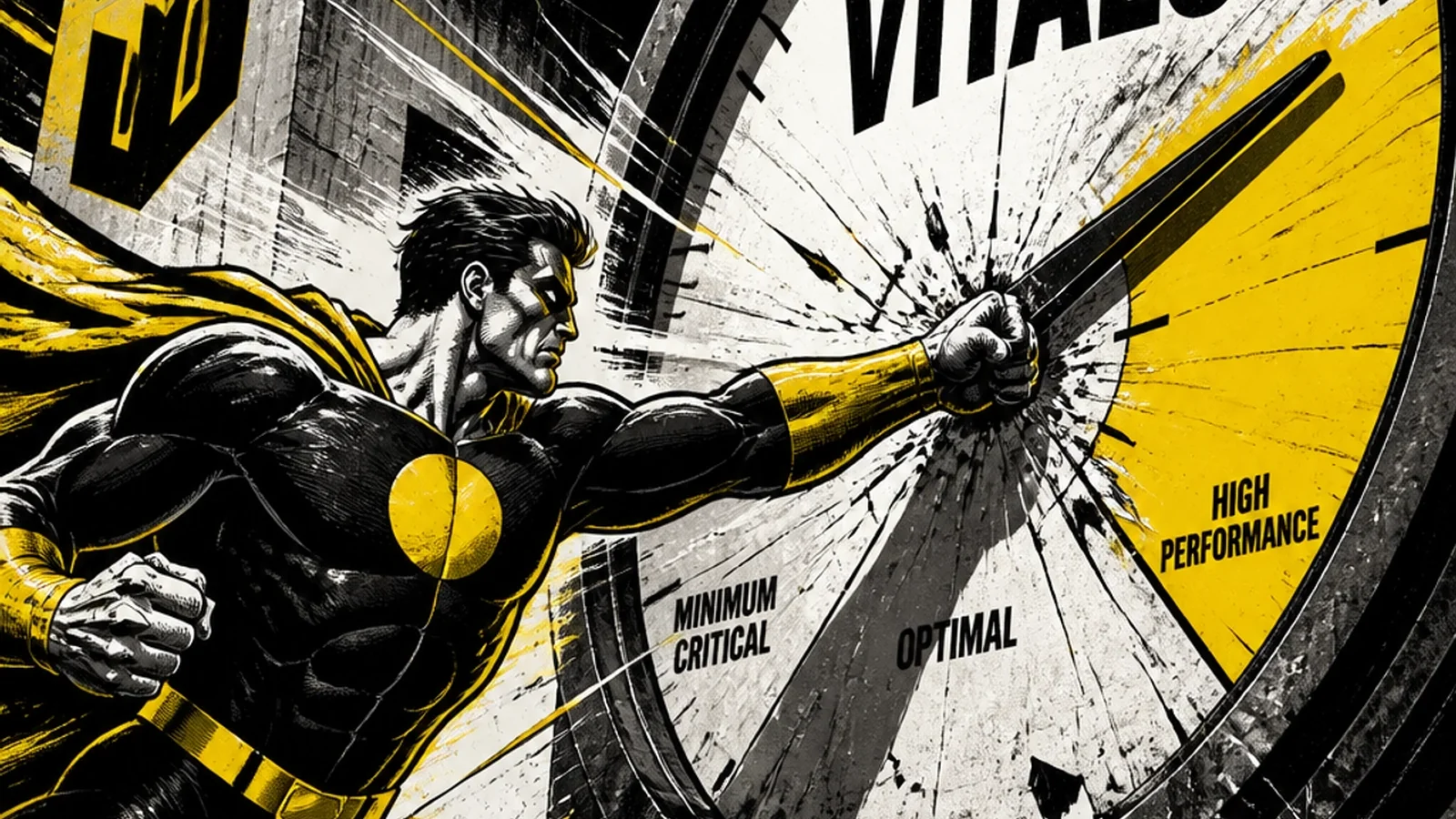
A hero is only as good as their reflexes. If your website takes five seconds to load, you aren't a hero — you're a statue. And statues get pooped on by pigeons (and ignored by Google).
In Shadow City, the engine room is powered by Core Web Vitals. These are the metrics that tell the world how fast and stable your site really is.
- LCP (Largest Contentful Paint): How fast does the biggest thing on your page load? If it's over 2.5 seconds, you're losing the race.
- INP (Interaction to Next Paint): This is the new king. It measures how quickly your site reacts when someone clicks a button. If your site "thinks" for too long, the user is gone.
- CLS (Cumulative Layout Shift): Does your content jump around while loading? That's like a hero tripping over their own cape. It's embarrassing and it drives users crazy.
WHAM! To fix this, you need to compress your images, minify your bloated JavaScript, and use a high-performance CDN. We don't settle for "good enough" speed. We optimize until the needle is screaming in the yellow. Check out our SEO services to see how we turn clunky sites into high-speed interceptors.
Schema Crystals: Speaking the Language of the Gods

The search engines aren't just algorithms anymore — they are evolving into AI entities that want to understand your business, not just index it. To communicate with these digital overlords, you need Schema Markup.
Think of Schema as glowing crystals that act as a universal translator. By adding structured data to your code, you're telling the AI: "This isn't just text; it's a Review." "This isn't just a number; it's the Price." "This is our Location."
Why it matters in 2026: AI models and LLMs (Large Language Models) are now the gatekeepers of information. If you use structured data, you are 30–40% more likely to be cited by an AI as a primary source. You want to be the "Expert" in their database? You need the crystals.
At 141 Creative, our process involves deep-embedding this structured data into every page. We don't just hope the AI finds you — we send them a gilded invitation written in their native tongue.
The Sitemap Maze: Architecture is Destiny
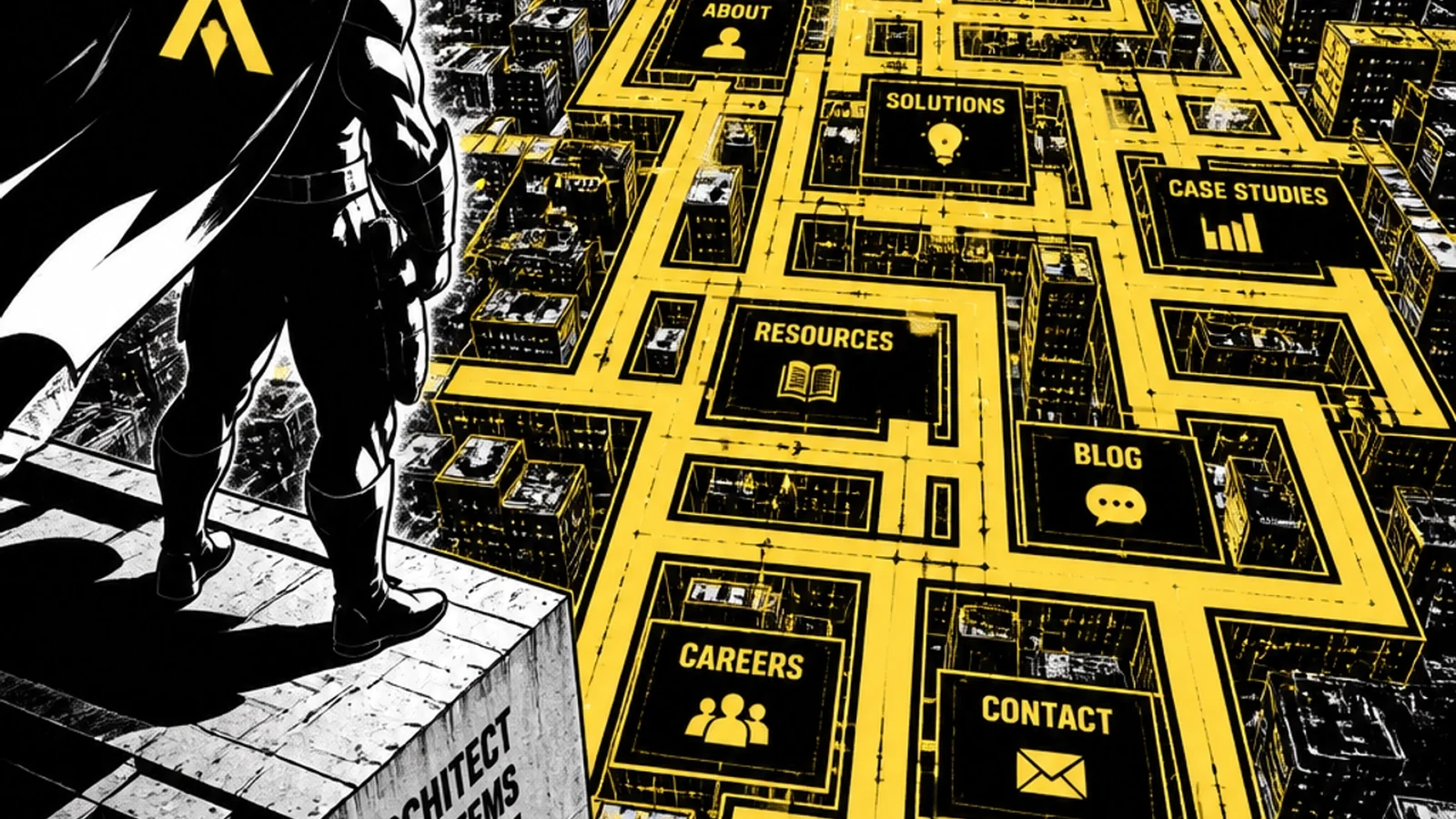
If Shadow City is a mess of dead ends and confusing alleys, no one — not even the Google-bots — will find your best content. This is where Site Architecture comes in.
A true hero needs a map. Your XML sitemap and your internal linking structure are the blueprints of your empire. You need a Topical Pillar strategy.
- The Pillar: A massive, authoritative page on a core topic.
- The Clusters: Smaller, focused pages that link back to the pillar.
This creates a "League" of content that supports itself. It tells search engines, "We aren't just guessing — we are the authority on this subject." If your site architecture is flat or messy, you're just a vigilante in a dark alley. With a solid structure, you're a LEAGUE.
A clean URL structure (like 141creative.com/services/seo) is way better than a garbled mess of numbers and symbols. It's about clarity. It's about dominance. It's about making sure the path to contacting us is as straight as a laser beam.
The Shield: Security and HTTPS
You wouldn't leave the front door to the Batcave wide open, would you? Then why is your site still running on HTTP?
Security isn't just a "nice to have" — it's a ranking factor. Google hates insecure sites. If you don't have an SSL certificate (the little padlock in the browser bar), you're walking into a fight without armor. You're vulnerable to hackers, and you're scaring away your customers.
In Shadow City, we forge shields. We ensure your HTTPS is locked down, your headers are secure, and your data is encrypted. A hero protects their citizens; a business owner protects their users' data.
The Reward: Emerging from the Shadows
Technical SEO isn't "set it and forget it." The villains are always evolving. New core updates, new AI requirements, and new performance standards mean you have to stay vigilant.
But when the Shadow City is running perfectly? That's when the magic happens.
- Your pages load in the blink of an eye.
- Search engines find and index your content instantly.
- AI agents recommend your brand as the top authority.
- Users glide through your site without a single friction point.
You aren't just another website in the crowd. You are a TITAN.
Ready to descend into the backend and fix your machinery? You don't have to go alone. The League at 141 Creative is ready to grab the wrenches and the code-cutters to rebuild your site from the foundation up. Whether you need a full web design overhaul or a surgical SEO strike, we've got your back.
BOOM. The city is safe. For now.
Want to see if your Shadow City is crumbling? Contact 141 Creative today for a deep-audit lab session. Let's get to work.