
Let's be honest: the phrase "data-driven marketing" makes most people's eyes glaze over faster than a PowerPoint presentation about quarterly synergies. It conjures images of endless spreadsheets, mind-numbing dashboards, and meetings where someone inevitably says, "Let's dive deeper into the metrics" while everyone else silently questions their life choices.
But here's the plot twist, data doesn't have to be the marketing equivalent of watching paint dry. When done right, analytics can actually be the secret sauce that transforms your marketing from "meh" to "magnificent," all while keeping your team engaged, energized, and maybe even excited. (Yes, excited about data. We know it sounds impossible, but stick with us.)
Stop Leading with Spreadsheets, Start with Stories
The biggest mistake teams make is diving headfirst into the data ocean without a life jacket made of context. Instead of opening every meeting with a dashboard that looks like mission control at NASA, start with the human story behind the numbers.
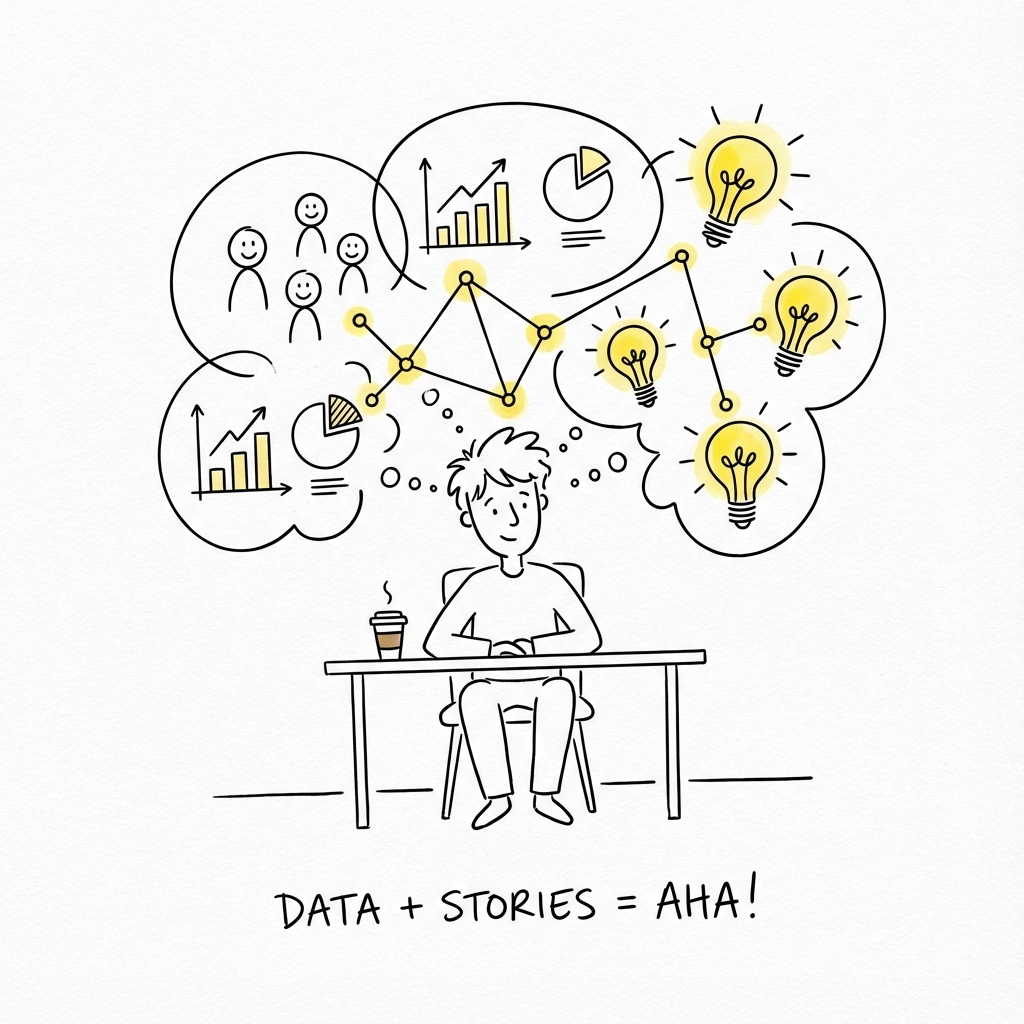
Think of your data as the supporting cast in a blockbuster movie, important, but not the star. The real star? The customer journey, the business challenge you're solving, or the breakthrough moment when everything clicked. When your team understands why they're looking at conversion rates (spoiler alert: it's not just to fill time in meetings), those numbers suddenly become a lot more interesting.
For example, instead of saying "Our email open rate increased by 12%," try this: "Remember Sarah from that customer interview who said our emails felt generic? Well, after we started personalizing subject lines based on industry data, we're seeing 12% more people like Sarah actually opening our messages: and three of them have already booked demos."
See the difference? Same data, way more compelling story.
Turn Your Team into Data Detectives, Not Data Servants
Nobody likes being handed a pile of numbers and told to "make it work." But everyone loves solving a mystery. Transform your analytics approach by turning your team into data detectives rather than passive recipients of reports.
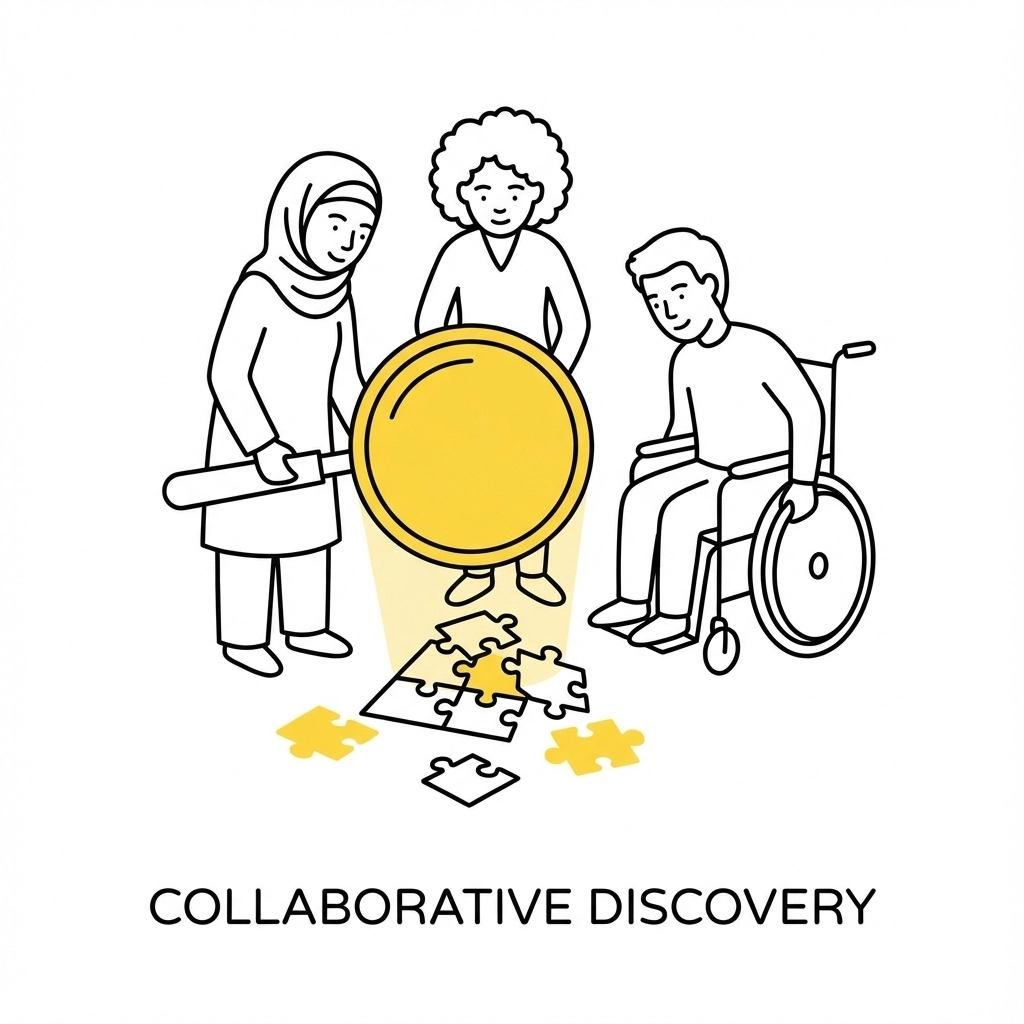
Start collaborative data sessions where marketing, sales, and creative teams work together to uncover insights. Present a business challenge and let the team dig into the data to find clues. When your content creator discovers that blog posts with questions in the headlines get 23% more engagement, they're not just following orders: they're using intelligence they helped uncover.
This collaborative approach does something magical: it turns data from an external imposition into internal ownership. When people help find the insights, they're invested in acting on them. Plus, different perspectives often reveal patterns that would've stayed hidden in solo analysis sessions.
Objectives That Matter: The SMART Way to Keep Things Interesting
Here's a revolutionary idea: your marketing objectives should actually be interesting enough that your team wants to achieve them. Vague goals like "increase engagement" are about as motivating as lukewarm coffee on a Monday morning.
Instead, use the SMART framework (Specific, Measurable, Achievable, Realistic, Time-bound) to create objectives that get your team fired up. Compare these two approaches:
Boring version: "Improve our social media performance."
Engaging version: "Increase qualified B2B leads from LinkedIn by 25% over the next 8 weeks by targeting decision-makers in manufacturing with pain point-focused content, measurable through demo requests and sales-qualified opportunities."
The second version doesn't just give your team a target: it gives them a mission. Everyone knows exactly what success looks like, how to achieve it, and why it matters to the business.
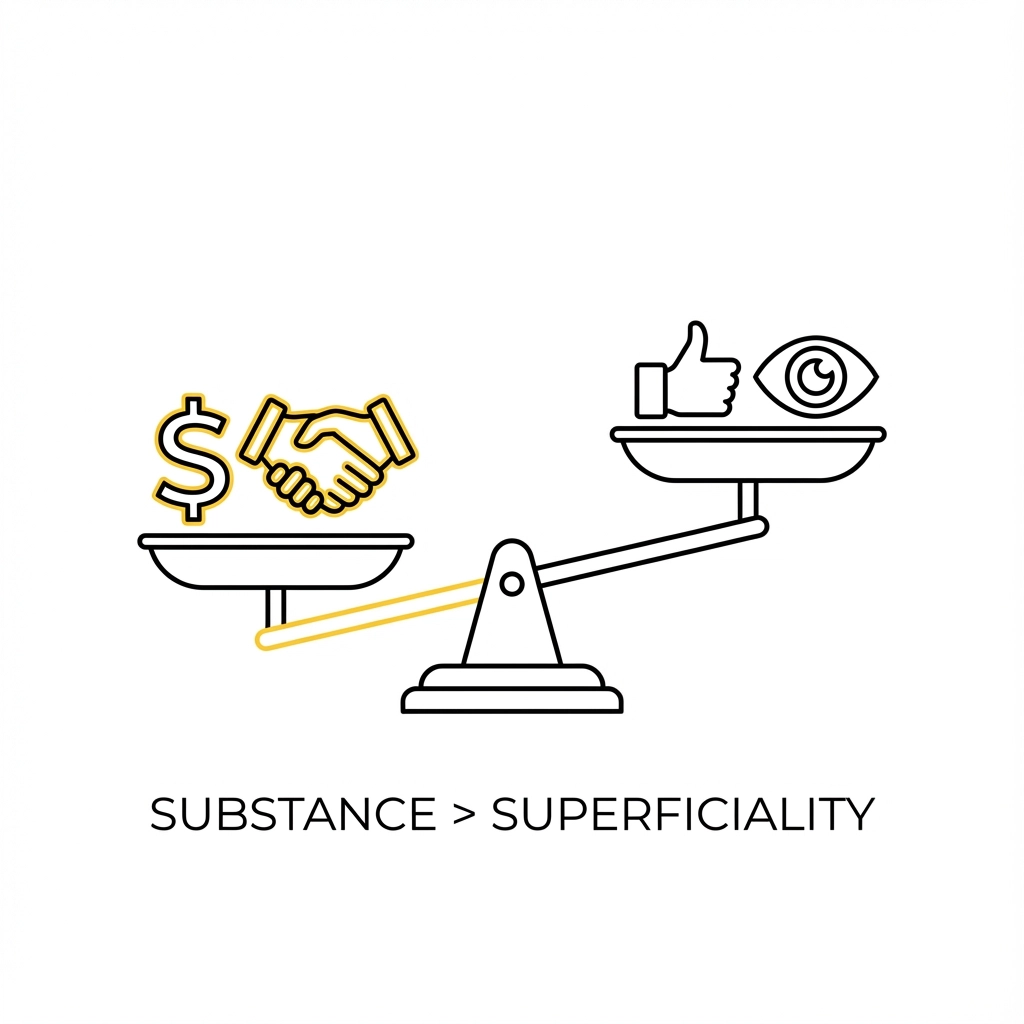
Ditch the Vanity Metrics That Make Everyone Feel Good But Accomplish Nothing
Nothing kills team morale faster than celebrating meaningless numbers. You know the ones we're talking about: those vanity metrics that make pretty graphs but have about as much business impact as a chocolate teapot.

We're looking at you, "total website visits" and "social media impressions." These numbers might stroke your ego, but they don't pay the bills or help your team understand what's actually working.
Instead, focus on metrics that connect directly to business outcomes:
- Cost per qualified lead (not just any lead)
- Customer lifetime value influenced by marketing
- Revenue attributed to specific campaigns
- Conversion rates at each funnel stage
When your team sees that optimizing email sequences increased customer lifetime value by 18%, they're not just looking at numbers: they're seeing the direct impact of their strategic decisions. That's the kind of data that gets people excited to come to work.
Make Testing Your Team's Favorite Game
A/B testing and continuous optimization can be the most engaging part of your data-driven approach: if you frame it right. Instead of treating tests as boring experiments, turn them into friendly competitions and learning opportunities.
Create hypothesis battles where team members predict which version will perform better and why. Track not just the results but the reasoning behind the predictions. When someone correctly guesses that adding social proof to a landing page will increase conversions, celebrate their marketing intuition alongside the data validation.
Keep a running scoreboard of successful optimizations and their impact. When your team sees that last month's email subject line test increased revenue by $12,000, testing stops feeling like busywork and starts feeling like treasure hunting.
The key is creating a culture where failed tests are learning opportunities, not disappointments. Every "losing" variation teaches you something valuable about your audience: and that knowledge compounds over time.
Real-Time Results Keep the Energy High
Nothing kills enthusiasm like waiting three months to see if your strategy worked. Implement systems that show results in real-time or near real-time, so your team can see the immediate impact of their data-driven decisions.
Set up dashboards that update daily (or even hourly for time-sensitive campaigns) and make checking results part of your team's routine. When someone suggests A/B testing a new call-to-action and you can see the results by Thursday, data becomes dynamic and responsive rather than static and academic.
The Secret Sauce: Making Data Feel Human
At the end of the day, the secret to making analytics engaging isn't about better charts or fancier tools: it's about connecting data to human outcomes and team ownership. When your team understands how their data-driven decisions impact real customers and real business results, those spreadsheets transform from boring obligations into powerful tools for success.
Remember, you're not trying to turn your marketing team into data scientists. You're trying to turn them into better marketers who happen to use data as their competitive advantage. There's a big difference, and that difference is what separates teams that dread analytics meetings from teams that can't wait to see what the numbers reveal next.
The goal isn't just to be data-driven: it's to be data-driven and genuinely excited about where that data leads you. When you nail that combination, boring becomes impossible, and your marketing starts producing results that speak for themselves.
0 Comments