Chapter 28: Portal Opens - Geo-Targeted Landing Pages
 Andrew MahoneyJune 4, 2026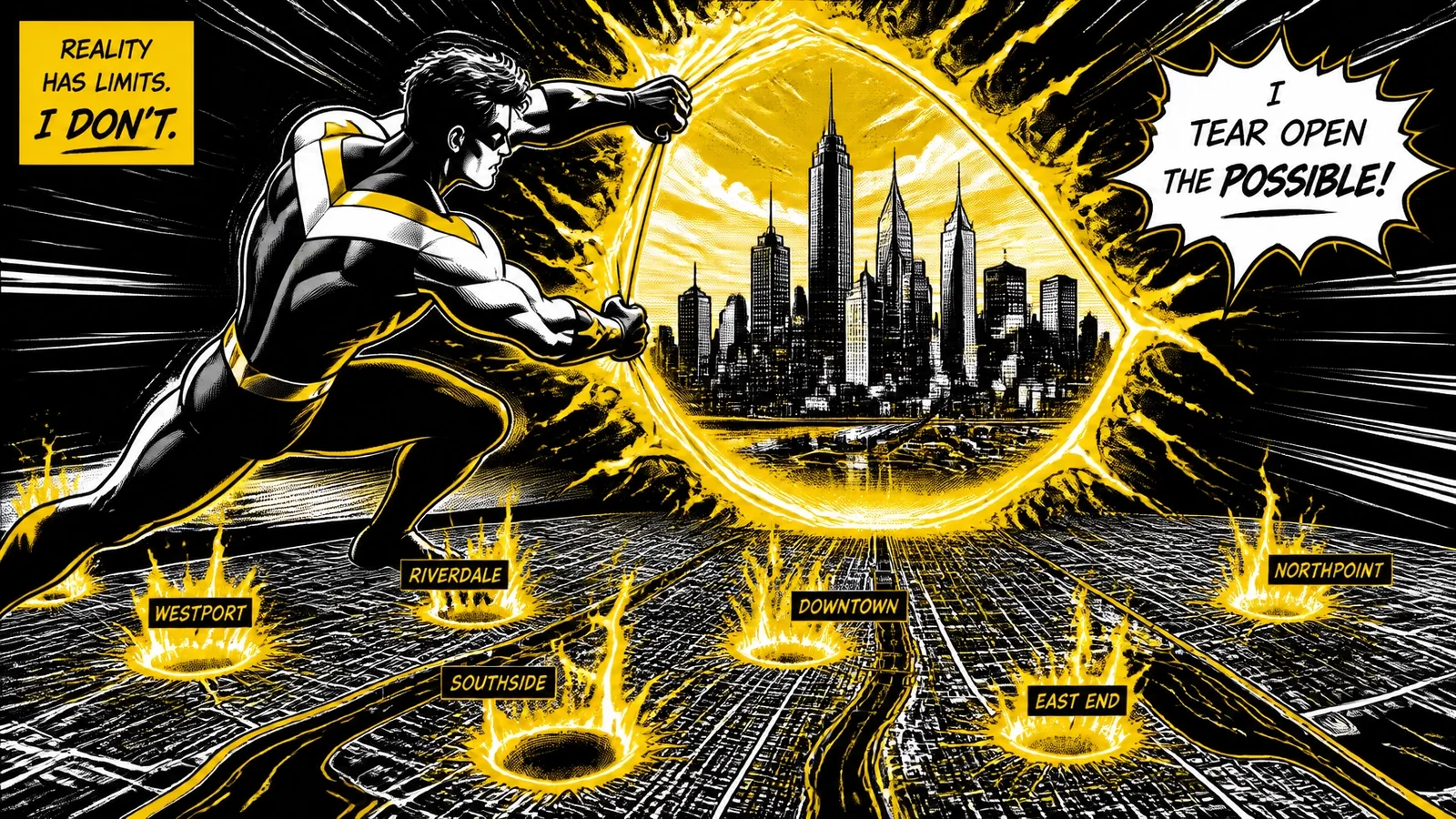
Listen up, Hero. You've built the fortress. Your website is sleek, your brand is punchy, and your message is sharper than a Batarang. But there's a problem. A massive, looming, shadow-drenched problem. You're trying to save the whole world from a single basement in New Jersey, and the citizens of Gotham, Metropolis, and Star City have no idea you exist.
You're suffering from Generic Geographic Obscurity.
In the digital marketing multiverse, being “everywhere” usually means you're actually nowhere. When a desperate business owner in Austin searches for “Custom Web Design,” they don't want a hero who lives in a cloud. They want a hero who knows where the best brisket is. They want local relevance. They want a portal.
BAM! That's where we come in. At 141 Creative, we don't just build sites; we tear rifts in the fabric of the local search map. It's time to stop being a ghost. It's time to open the portals.
The Villain: The Ghost of Nowhere

Meet your arch-nemesis. He's grey, he's blurry, and he's haunting your search rankings. The Ghost of Nowhere thrives on “General Service Areas.” He loves it when you put “Serving the Entire Tri-State Area” in a tiny font at the bottom of your footer and call it a day.
Why is he a threat? Because search engines like Google are the ultimate gatekeepers, and they have a very specific set of rules for who gets to wear the CAPE in local search. If your site doesn't have a physical or digital footprint in a specific city, you're invisible to the people living there.
The Ghost wants you to stay hidden in the noise. He wants your SEO strategy to be as broad as a barn door and as shallow as a puddle. When you fight him with generic content, you lose. Every. Single. Time.
But the LEAGUE has a secret weapon.
The Solution: Geo-Targeted Portals
A geo-targeted local landing page is more than just a “Contact Us” page with a different city name slapped on it. That's a cheap trick, and the Google overlords will sniff out that “doorway page” villainy faster than you can say “POW!”
A true Portal is a hyper-focused, high-conversion gateway that teleports your brand directly into the heart of a specific neighborhood. It's a dedicated page designed to rank for local keywords while providing actual value to the citizens of that area.
When we deploy our Custom Web Design powers, we aren't just changing a header. We are building a localized experience.
The Blueprint of a Powerful Portal
To open a portal that actually stays open, you need the right components. You can't just wing it. You need the League's blueprint:
- Unique Local Intel: Stop copy-pasting. If your Chicago page looks exactly like your Houston page, you're failing. Mention local landmarks. Talk about the specific challenges businesses in that city face. Are you an SEO hero in Boston? Mention the T. Mention the Pru. Show them you're actually there.
- The Signal (NAP): Name, Address, and Phone number. This is your homing beacon. It must be consistent, clear, and local.
- Local Social Proof: Testimonials from people in that specific area. If I'm in San Diego, I want to see that you've helped other San Diego legends win. Check out our Portfolio to see how we've helped businesses across the map plant their flag.
- Google Map Integration: Don't just tell them where you are — show them. An embedded Google Map is like a giant yellow “X” marks the spot for search bots.
Calibrating the Machine: The Technical Forge
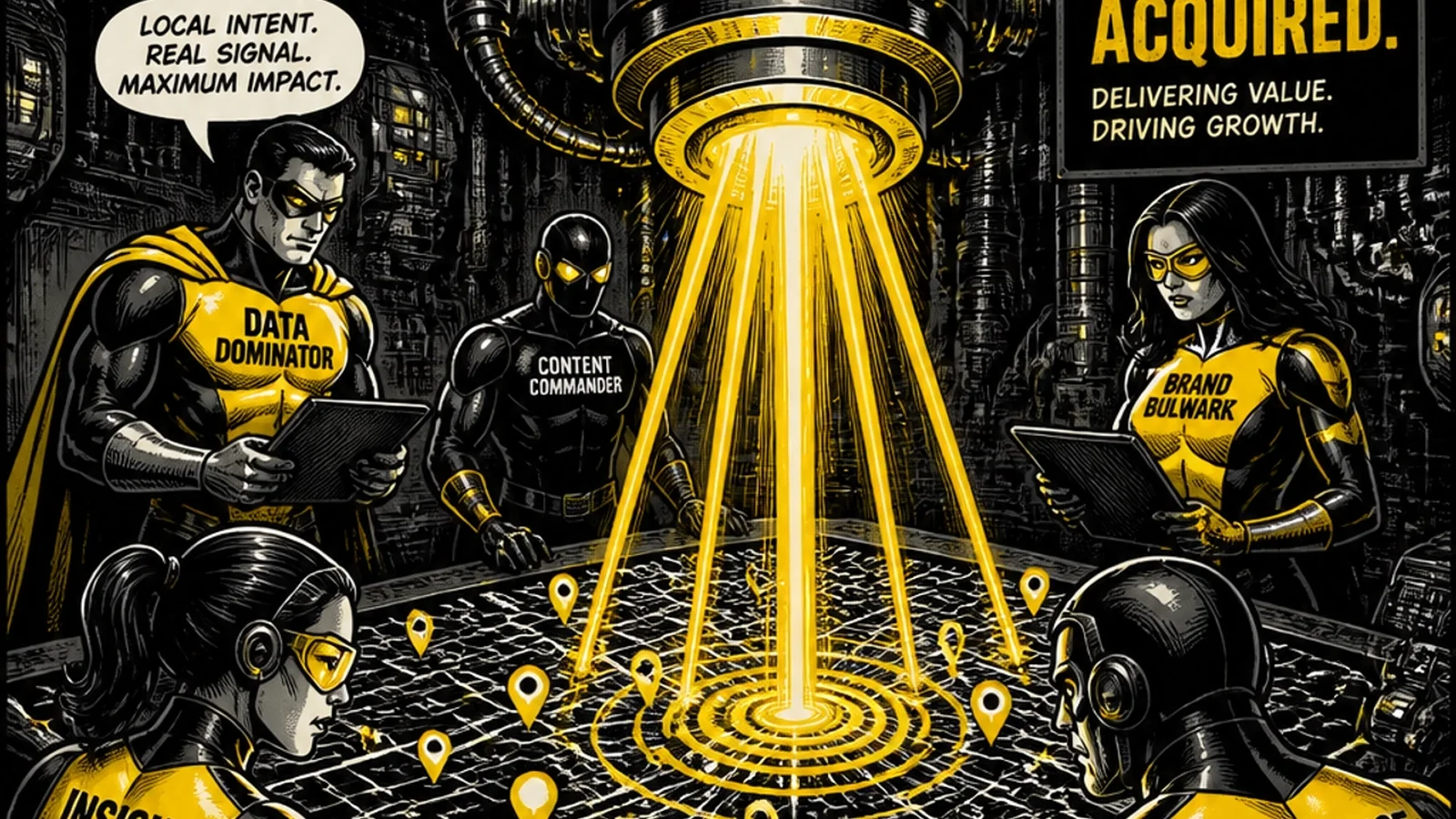
Back at the 141 Creative Deep Audit Lab, we don't just throw paint at the wall. We calibrate. Building these portals requires a heavy dose of technical wizardry. We're talking LocalBusiness Schema, structured data that tells search engines exactly who you are, what you do, and where you do it in a language they can't ignore.
We look at the Process behind every click. We optimize for mobile because local heroes are usually on the move. If your portal takes ten seconds to load on a smartphone, your lead is going to vanish into the clutches of a competitor before the first image even renders.
We also coordinate these portals with your Google Business Profile (GBP). Think of your GBP as your headquarters and the landing pages as your tactical outposts. They need to be in constant communication. When they are, the result is a massive surge in visibility that leaves the competition in the dust.
The Power: Why the Portal Wins
Why go through all this trouble? Why not just run a generic ad and hope for the best? Because the numbers don't lie, and the ROI is legendary.
- Conversion Dominance: Companies with 10-15 localized portals see a 55% increase in conversions. Jump to 40+ portals? You're looking at up to a 500% gain. That's not just a win; that's a total takeover.
- Trust Factor: People trust local. They want to work with the HERO who is right around the corner, not a faceless corporation three time zones away.
- Lower Ad Spend: When your landing pages are hyper-relevant, your Quality Score in Google Ads goes up, and your Cost Per Click (CPC) goes down. You're hitting harder for less money.
BAM! That's the sound of your budget actually working for you.
Victory: Dominating the Map

The portals are open. The signals are clear. The Ghost of Nowhere has been banished back to the shadow realm of page 10.
When you master geo-targeted local landing pages, you aren't just a business owner anymore. You're a Master of Two Worlds. You have the scale of a national brand and the soul of a local shop. You're everywhere your customers need you to be, exactly when they need you.
But remember: with great power comes great responsibility. You can't just set these portals and forget them. They need maintenance, updates, and fresh intel to stay ahead of the ever-changing algorithm storms.
Are you ready to stop being invisible? Are you ready to see your name in lights across every city on your hit list? The League is standing by.
CONTACT THE LEAGUE AT 141 CREATIVE and let's start ripping some portals. Your city is waiting for its hero.
POW! 💥