
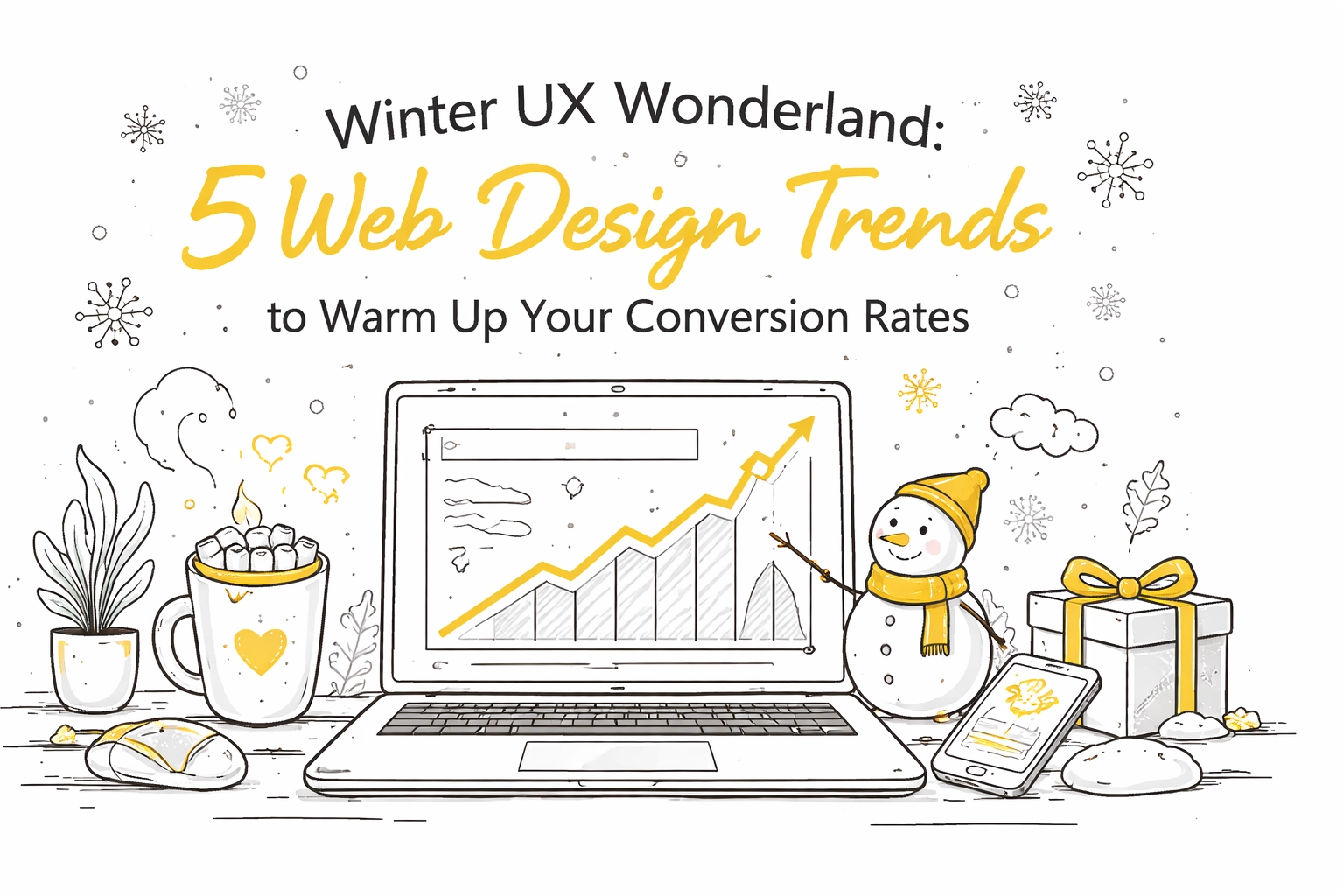
Baby, it's cold outside, but your website's conversion rates don't have to be.
While you're bundled up with your third cup of hot cocoa, your visitors are out there scrolling through a blizzard of websites, looking for something that actually feels worth their time. The question is: does your site make them want to stay by the fire, or does it leave them out in the cold?
As we settle into early 2026, the web design landscape is shifting faster than snowdrifts in a nor'easter. Users are savvier, attention spans are shorter, and the bar for "good enough" has officially frozen over. If your website still looks and functions like it did in 2023, well… let's just say you're showing up to a snowball fight with a squirt gun.
But fear not, frosty friend! We've curated five sizzling UX trends that are heating up the digital world right now. These aren't just pretty design fads, they're conversion-boosting powerhouses backed by real user psychology and cutting-edge technology.
So grab that cocoa, pull up a chair, and let's take a stroll through this Winter UX Wonderland together.
1. Contextual & Adaptive UI: Reading the Room (and the Weather)
Remember when websites were essentially digital brochures? Same content for everyone, every time, no matter what? Those days are as outdated as dial-up internet.
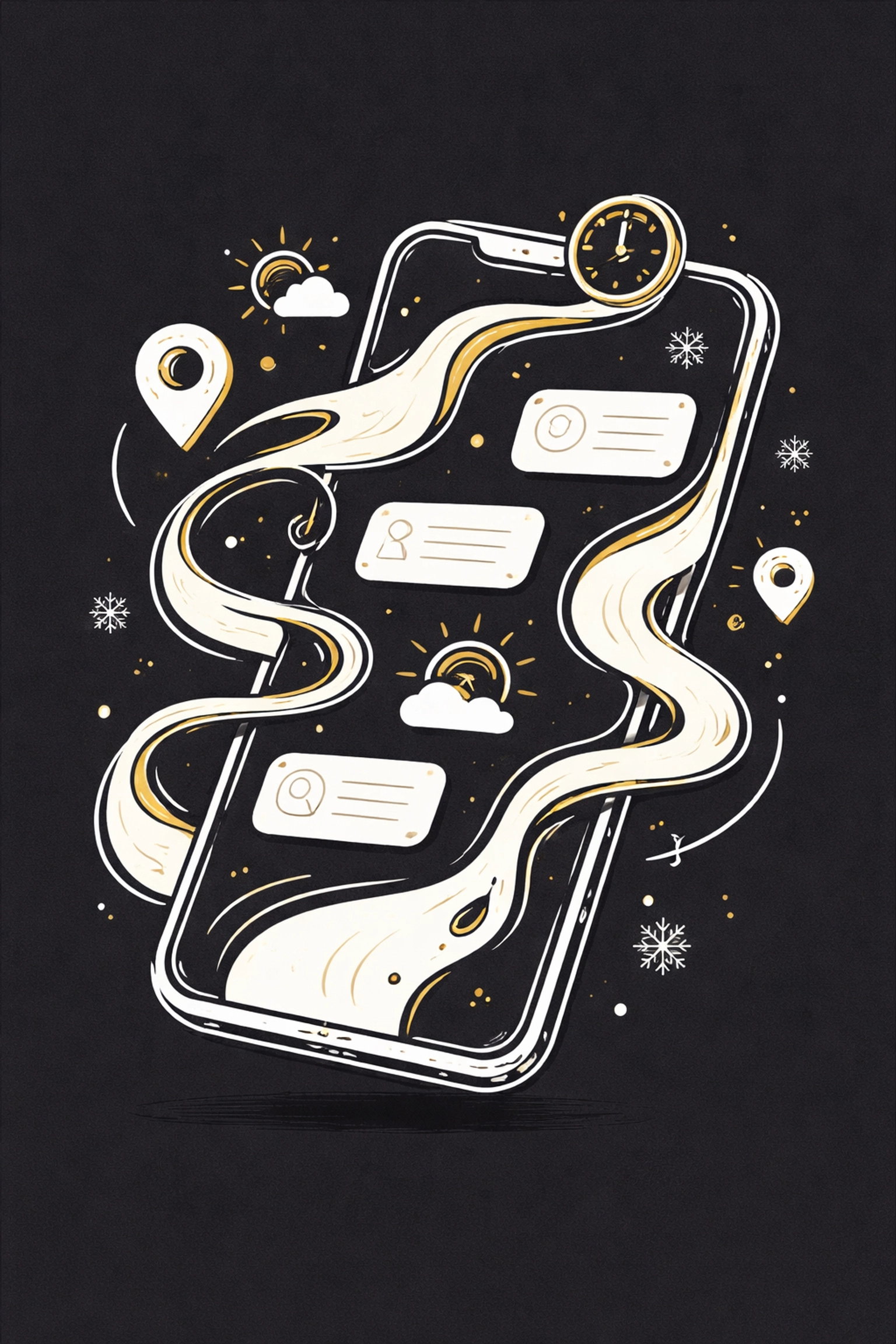
Contextual and adaptive UI is the 2026 equivalent of a concierge who just gets you. These intelligent interfaces adjust content, imagery, and calls-to-action in real-time based on factors like:
- Time of day (showing breakfast specials in the morning, dinner deals at night)
- Location (highlighting local services or region-specific promotions)
- Weather conditions (promoting cozy indoor activities during a snowstorm)
- Visitor status (welcoming returning customers differently than first-timers)
Imagine landing on a retail site during a winter storm and immediately seeing promotions for blankets, hot beverages, and delivery options. That's not coincidence, that's smart UX design reducing friction and serving exactly what users need in that moment.
Why it boosts conversions: When your website feels like it was built specifically for each visitor, engagement skyrockets. You're not asking users to dig through irrelevant content, you're handing them exactly what they came for on a silver (or snow-covered) platter.
Pro tip: Start small. Even implementing time-based messaging or location-specific CTAs can make a noticeable difference without requiring a complete site overhaul.
2. AI-Powered Personalization: Your Website's New Best Friend
We've been talking about personalization for years, but 2026 is when it truly grows up. Thanks to advancements in artificial intelligence, websites are evolving from static digital spaces into dynamic, fully customized experiences.
We're not just talking about "Hey [First Name]!" in an email header anymore. Modern AI-powered personalization means:
- Dynamically generated interfaces that adapt to individual user requests
- Predictive content delivery based on browsing behavior and purchase history
- Smart product recommendations that actually make sense (goodbye, "You bought a refrigerator, here are 47 more refrigerators!")
- Conversational UI elements that guide users through complex decisions
Think of it like having a really, really attentive sales associate who remembers every conversation you've ever had, except they don't get tired, don't take lunch breaks, and never accidentally call you by the wrong name.
Why it boosts conversions: Personalization reduces decision fatigue. When users don't have to wade through irrelevant options, they move through your funnel faster and with more confidence. It's the difference between wandering through a department store and having a personal shopper hand you exactly what you need.
The catch: With great personalization comes great responsibility. Transparency about data usage is crucial. Users should feel served, not surveilled. Make sure your privacy policies are clear and your data collection is ethical.
3. Organic Shapes and Anti-Grid Layouts: Breaking Free from the Box
For years, web design has been dominated by rigid grids, sharp corners, and geometric precision. And hey, there's nothing wrong with structure: but in 2026, we're seeing a delightful rebellion against the box.
Organic shapes and anti-grid layouts are bringing warmth, humanity, and visual intrigue back to web design. Think:
- Flowing curves instead of harsh right angles
- Asymmetrical compositions that guide the eye naturally
- Soft gradients that mimic natural light
- Blob shapes and irregular patterns that feel approachable and friendly
This trend is essentially the digital equivalent of choosing a cozy cabin over a sterile office building. It feels different: warmer, more inviting, more human.
Why it boosts conversions: Emotional connection drives action. When your website feels approachable rather than clinical, visitors are more likely to trust you, stay longer, and ultimately convert. Plus, organic shapes can be used strategically to draw attention to CTAs without feeling forced or aggressive.
Design note: This doesn't mean throwing usability out the window. The best organic designs still maintain clear visual hierarchy and intuitive navigation. It's controlled chaos, not actual chaos.
4. Nature Distilled Aesthetic: Bringing the Outdoors In
Speaking of warmth, let's talk about one of the coziest trends heating up 2026: the Nature Distilled aesthetic.
Picture this: earthy, muted color palettes featuring tones of clay, terracotta, soft sage, and weathered wood. Pair that with handwritten fonts, textured backgrounds, and imagery that emphasizes natural lighting and human connection. The result? Websites that feel like a warm hug on a cold January day.
This trend is a direct response to years of ultra-sleek, sometimes sterile minimalism. Users are craving authenticity, imperfection, and emotional resonance. They want to feel something when they visit your site: not like they're interacting with a robot.
Key elements of Nature Distilled design:
- Warm, earthy color palettes (think autumn leaves and winter forests)
- Textured backgrounds that add depth and tactile quality
- Storytelling-focused imagery featuring real people and genuine moments
- Handwritten or organic typography that adds personality
- Intentional imperfections that feel authentic rather than polished to death
Why it boosts conversions: Trust is the foundation of conversion, and nothing builds trust faster than authenticity. When your brand feels human, relatable, and genuine, visitors are far more likely to engage, subscribe, and purchase.
5. Intentional White Space with Strategic Minimalism: Less Really Is More
Here's a hot take (pun intended): most websites have too much stuff.
Too many competing CTAs. Too much text. Too many colors, animations, pop-ups, and distractions fighting for attention. The result? Cognitive overload that sends visitors running for the back button.
Strategic minimalism in 2026 isn't about making your website boring: it's about making what matters impossible to miss.
This means:
- Generous white space that gives content room to breathe
- Clean, readable typography that doesn't strain the eyes
- Restrained color palettes with purposeful accent colors
- Eliminating non-essential elements that don't serve a clear purpose
- Focused layouts that guide users toward specific actions
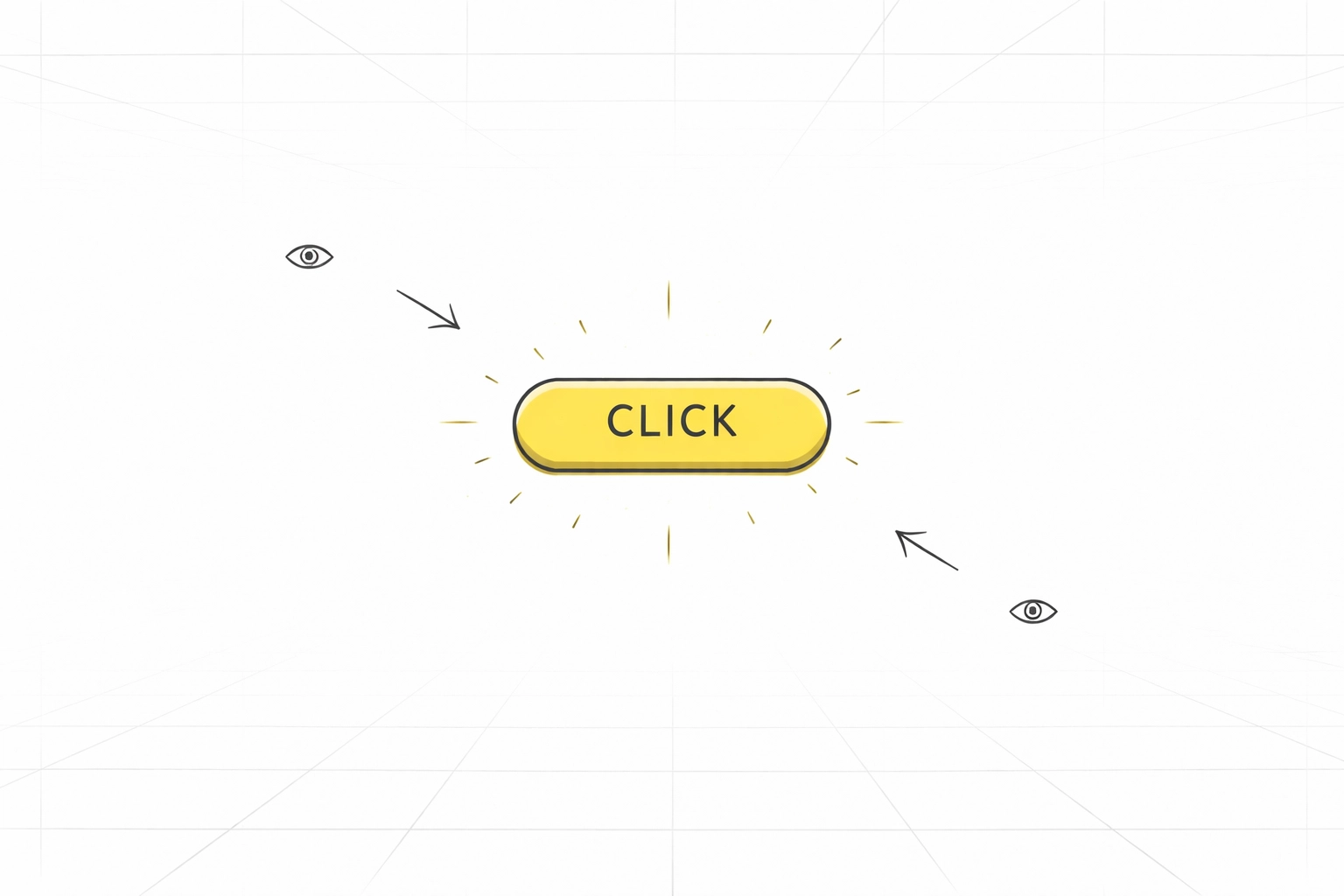
Think of it like decluttering your home before winter guests arrive. You're not getting rid of everything: you're removing distractions so the important stuff shines.
Why it boosts conversions: When users aren't overwhelmed by options, they make decisions faster and with more confidence. Strategic white space creates visual breathing room that naturally draws attention to your most important conversion points. Your CTA becomes a cozy fireplace in an otherwise calm room: impossible to ignore.
The balance: Minimalism doesn't mean boring. The key is intentional restraint. Every element that makes the cut should earn its place and serve a purpose.
Bundle Up and Get Building
There you have it: five web design trends that are turning up the heat on conversion rates this winter. From AI-powered personalization that anticipates user needs to organic aesthetics that build genuine emotional connections, the websites winning in 2026 are the ones that prioritize experience over everything else.
The common thread? Humanity. Users are tired of feeling like they're interacting with machines. They want websites that understand them, respect their time, and actually make their lives easier.
So as you sip that cocoa and watch the snow fall, ask yourself: is your website a warm, welcoming cabin… or a cold, confusing maze?
If it's time for a seasonal refresh, the team at 141 Creative is here to help you create digital experiences that convert visitors into loyal customers: no matter how chilly it gets outside.
Stay warm out there. ❄️
0 Comments