
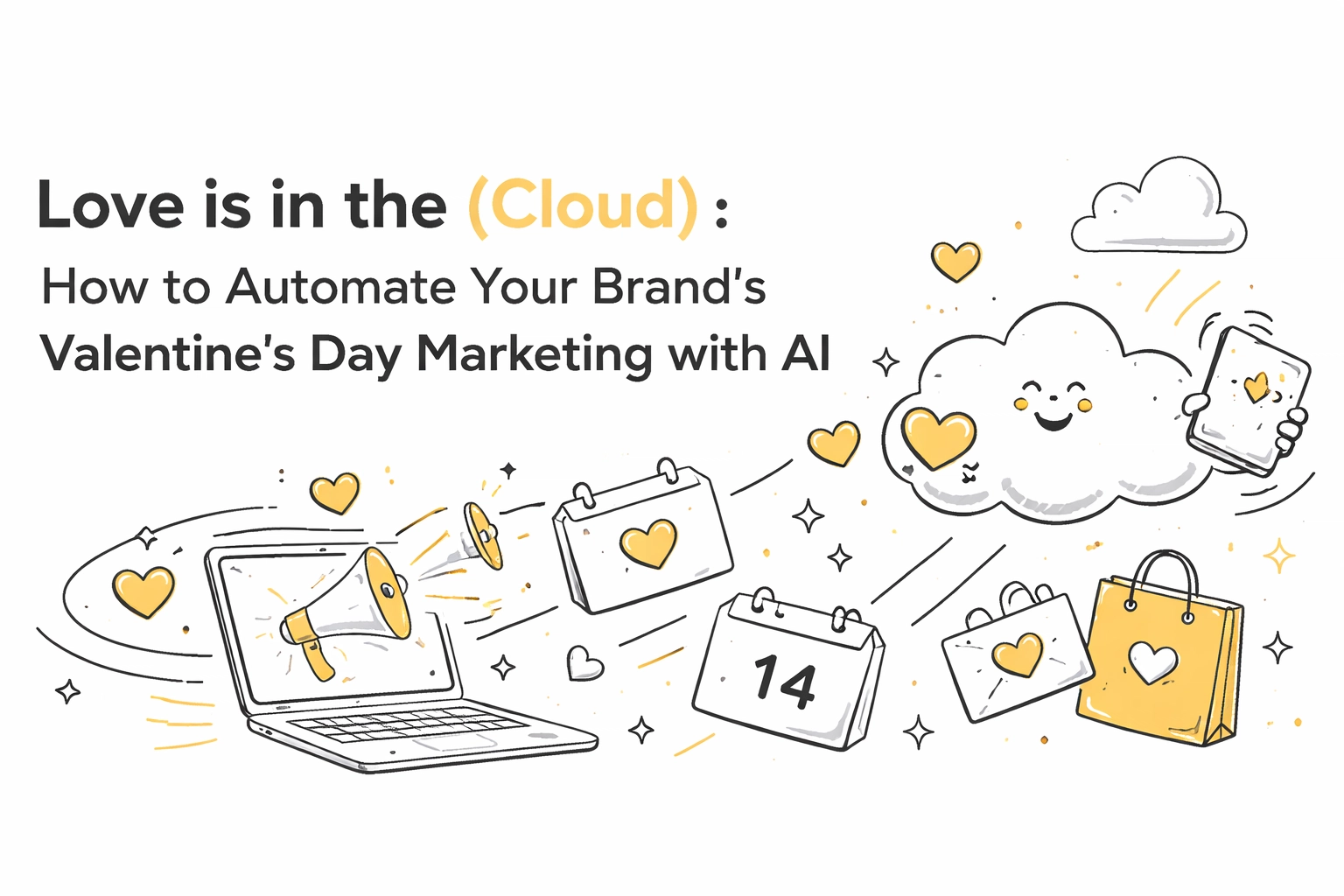
Ah, Valentine's Day. The one time of year when chocolates become currency, florists become celebrities, and your inbox fills up with more heart emojis than a middle schooler's text thread.
For marketers, it's a beautiful, chaotic whirlwind of opportunity, and stress. Between crafting the perfect campaign, segmenting audiences, personalizing messages, and praying your email doesn't land in spam purgatory, there's a lot on your plate. And no, we're not talking about the heart-shaped pizza you're stress-eating at your desk.
But here's the thing: you don't have to do it all alone. In fact, you shouldn't. Because in 2026, AI isn't just your wingman, it's basically Cupid with a computer science degree.
Let's talk about how to automate your Valentine's Day marketing with AI, so you can spread the love without losing your mind (or your weekends).
Why AI and Valentine's Day Marketing Are a Match Made in Heaven
Before we dive into the tactical stuff, let's address the elephant (or should we say, the giant teddy bear) in the room: Why AI?
Valentine's Day marketing operates in a compressed selling window. You've got roughly two weeks of peak buying activity, customers who are stressed about finding the "perfect" gift, and competition that's fiercer than a reality TV dating show.
AI helps you cut through the noise by:
- Personalizing at scale (because "Dear Valued Customer" doesn't exactly scream romance)
- Automating repetitive tasks (so you can focus on strategy, not spreadsheets)
- Predicting what customers want (sometimes before they even know)
- Responding in real-time (because nobody wants to wait 24 hours for gift advice)
In short, AI lets you deliver the kind of thoughtful, personalized experience that makes customers feel special, without requiring you to personally hand-write 10,000 love letters.
The AI-Powered Love Arsenal: Key Automation Strategies
Let's break down the specific ways AI can transform your Valentine's Day campaigns from "meh" to "marry me."
1. Personalized Gift Recommendations (AKA Playing Matchmaker)
Gift-giving is stressful. There's even a term for it: "gift paralysis." Your customers are staring at your product catalog like it's a dating app, swiping through options and wondering, "But will they LIKE it?"
AI-driven predictive analytics can analyze customer data, purchase history, browsing behavior, budget sensitivity, relationship context, and serve up tailored recommendations that actually make sense.
Think about it:
- A customer who previously bought hiking gear? Suggest an adventure-themed couples' experience.
- Someone browsing budget-friendly options at 11 PM on February 12th? They're a last-minute shopper who needs expedited shipping suggestions, stat.
Brands like Pandora and Lush are already using AI to recommend products based on individual preferences, complete with virtual try-on capabilities. It's like having a personal shopping assistant who never takes a lunch break.
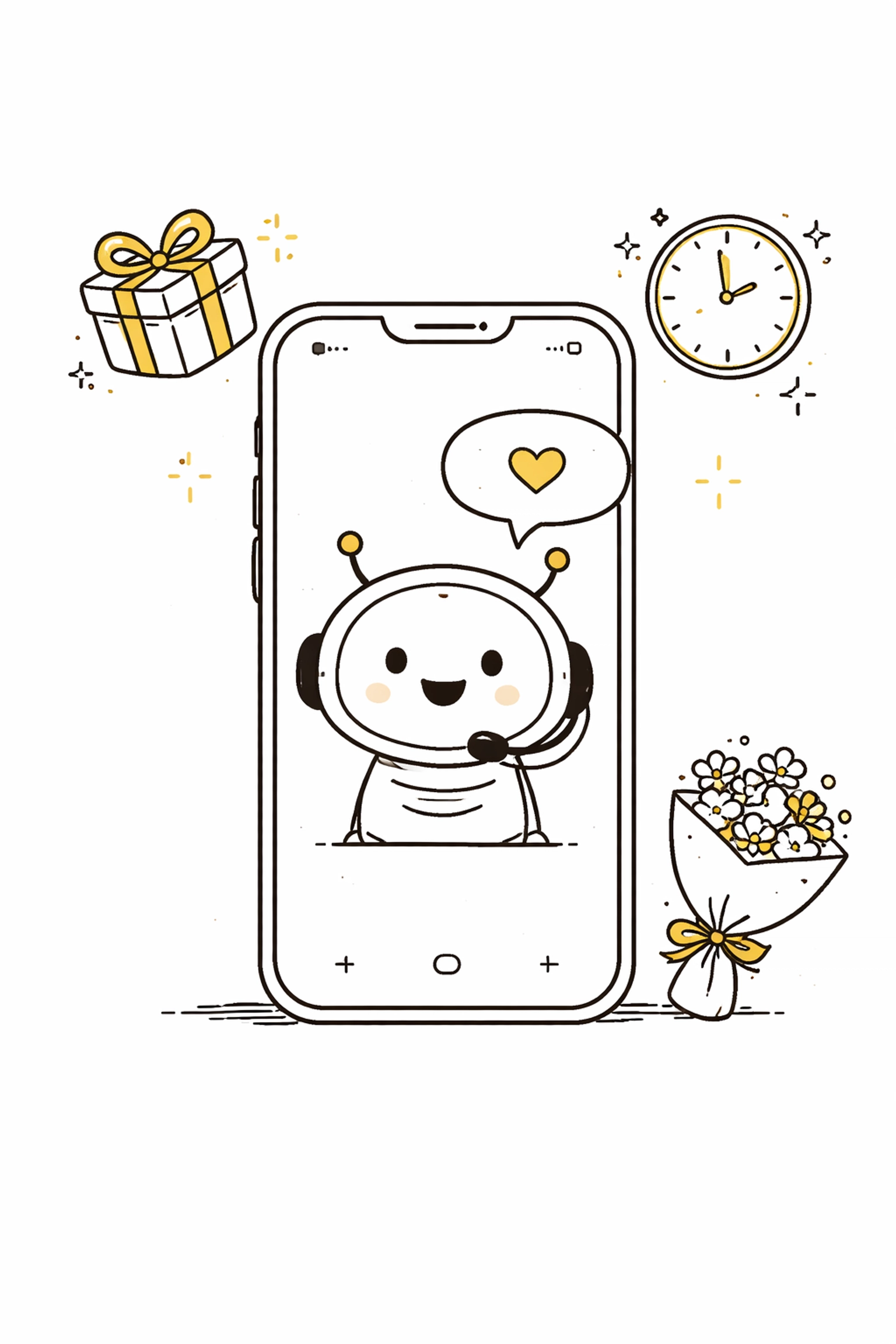
2. Virtual Assistants and Chatbots (Your 24/7 Love Consultants)
Picture this: It's 2 AM. A panicked customer lands on your website, desperately searching for the perfect gift because they just remembered Valentine's Day is tomorrow. Your team is asleep (as they should be). Who's going to help?
Enter: AI-powered chatbots.
These virtual assistants can handle customer inquiries in real-time, guiding shoppers to the right products based on recipient characteristics, occasion, and budget. They can answer questions, provide order updates, and even learn about gift recipients' hobbies to suggest appropriate items, all without human intervention.
Teleflora, for example, uses AI assistants to guide customers toward ideal floral arrangements based on who they're buying for. It's like having a florist in your pocket, minus the pollen allergies.
3. Sentiment Analysis (Reading the Room, Digitally)
Here's where AI gets a little spooky, in the best way possible.
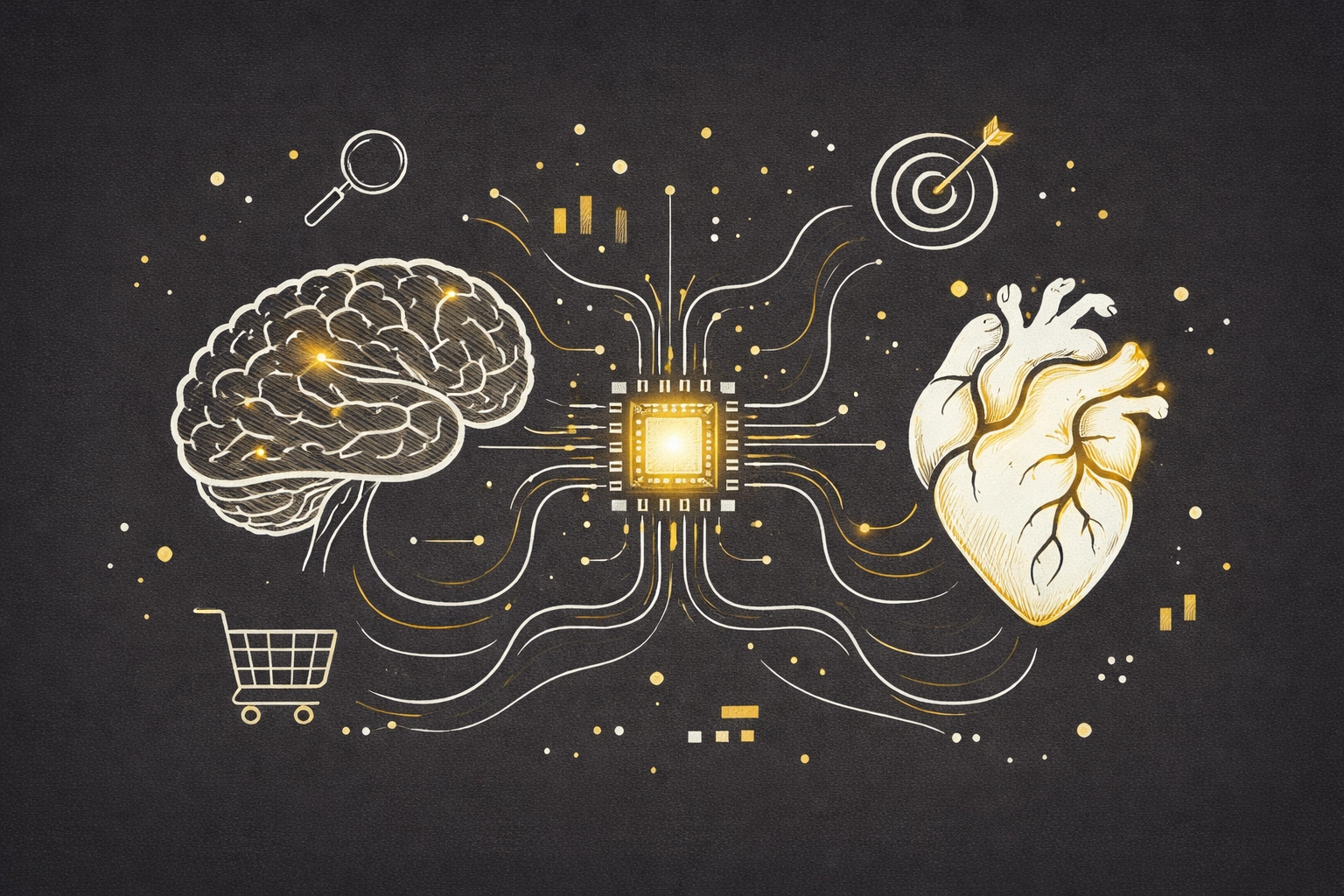
AI algorithms can analyze customer sentiment and browsing behavior to refine your marketing messages dynamically. If someone's been lingering on "apology gifts" rather than "romantic gestures," your messaging can adjust accordingly. (Hey, we don't judge. Relationships are complicated.)
Moonpig uses AI-powered content tools to analyze user interactions and personalize greeting cards on the fly. The result? Messages that feel genuinely thoughtful, not like they were mass-produced by a robot (even though, technically, they kind of were).
4. Dynamic Content Creation at Scale (Love Letters, Automated)
Writing personalized content for thousands of customers sounds like a nightmare. But AI? AI thrives on this stuff.
From generating romantic ad copy to crafting personalized product descriptions to even writing love poems (yes, really), AI can produce content that maintains quality and emotional resonance at scale. Hallmark has embraced AI to help create heartfelt, personalized messaging without sacrificing the warm-and-fuzzy factor.
And before you ask: no, AI-generated love letters aren't "cheating." They're efficiency.
High-Impact Deployment Areas: Where to Focus Your AI Energy
Okay, so you're sold on the concept. But where should you actually deploy AI for maximum Valentine's Day impact? Here are the heavy hitters:
Smart Search and Discovery
When a customer types "gifts for book lovers" or "romantic gifts under fifty dollars," AI-enhanced search functionality ensures they get hyper-relevant results, not a random assortment of products that vaguely match keywords.
Smart filters can automatically surface options ranked by relevance, popularity among couples, or personalization level. Less friction = more conversions = more love (and revenue) to go around.
Demand Forecasting and Inventory Management
Nothing kills the Valentine's vibe like "OUT OF STOCK."
AI can analyze social media trends, search data, and historical purchasing patterns to predict which products will fly off the shelves before the rush begins. This means you can stock up strategically and avoid the heartbreak of missed sales opportunities.
Cross-Selling and Upselling (The Art of "Would You Like Chocolates With That?")
AI-powered recommender systems can suggest complementary items at checkout, pairing flowers with chocolates, perfume with personalized cards, or jewelry with a romantic dinner reservation.
It's the digital equivalent of the impulse buys near the cash register, except smarter and more personalized. Your customers get a better experience, and your average order value gets a nice little boost. Everybody wins.
Targeted Advertising That Actually Makes Sense
Nobody wants to see a "couples' getaway" ad right after a breakup. (Trust us, the algorithm knows, and it should act accordingly.)
AI can identify audience segments most likely to respond to Valentine's Day offers and avoid irrelevant, or worse, insensitive, placements. It can also identify suitable influencers for partnerships and generate ad copy designed to trigger the right emotional responses.
Getting Started: Your AI Valentine's Checklist
Ready to put AI to work this love season? Here's a quick checklist to get you started:
- Audit your data. AI is only as good as the data it's working with. Make sure your customer information is clean, organized, and accessible.
- Identify your pain points. Where are you spending the most time on repetitive tasks? That's where AI can help most.
- Start small. You don't need to automate everything overnight. Try implementing AI chatbots or personalized recommendations first, then expand.
- Monitor and adjust. AI learns over time, but it still needs human oversight. Keep an eye on performance and tweak as needed.
And hey, if all of this sounds overwhelming, that's what we're here for. At 141 Creative, we help brands navigate the ever-evolving digital landscape: including figuring out how to make AI work for your specific needs.
The Bottom Line: Let AI Be Your Valentine
Valentine's Day marketing doesn't have to be a stressful, sleepless affair. With AI handling the heavy lifting: personalization, automation, prediction, and optimization: you can focus on what really matters: building genuine connections with your customers (and maybe enjoying a heart-shaped cookie or two yourself).
So this February, let AI be your marketing Valentine. It won't forget your anniversary, it won't eat the last piece of chocolate, and it definitely won't ghost you.
Now that's true love.
0 Comments