
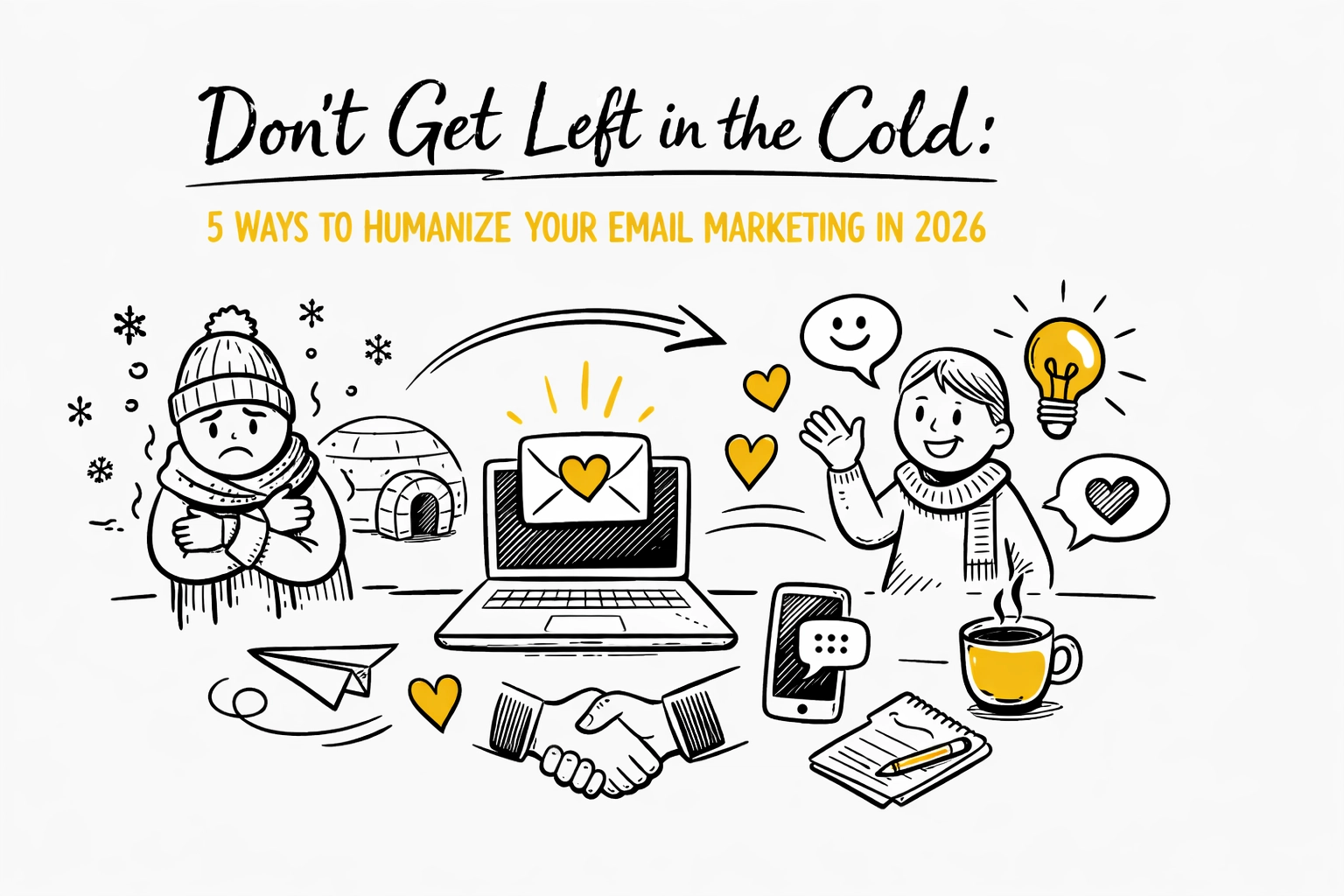
Let's be real: your inbox is probably a graveyard of soulless marketing emails right now. You know the ones, "Hi [FIRST_NAME], we noticed you abandoned your cart!" sent at 3:47 AM by what's clearly a robot with trust issues.
Here's the uncomfortable truth: your customers can smell automation from a mile away. And in 2026, when AI can write anything from sonnets to SQL queries, the biggest competitive advantage you have isn't more technology, it's being memorably, undeniably human.
So let's thaw out those frozen email campaigns and bring some actual warmth back to the inbox. Here are five ways to make your email marketing feel less like a data-driven obligation and more like a conversation with someone who actually gives a damn.
1. Stop Personalizing, Start Connecting
"But Penny," you're thinking, "I already personalize! I use their first name AND their city!"
Cool. So does literally every other brand with a $39/month email platform subscription.
Real talk: personalization tokens are the participation trophy of email marketing. Sure, "Hey Sarah from Boston" is technically customized, but it's about as emotionally engaging as a dentist appointment reminder.
True connection means understanding what makes your audience tick beyond their browsing history. It's the difference between "You left these items in your cart" and "Remember that cozy sweater you were eyeing? It just went on sale, and honestly, it's perfect for hiding snacks during movie night."
Here's how to shift from surface-level personalization to actual connection:
- Segment by values, not just behavior. Group people by what they care about, not just what they clicked.
- Reference shared experiences. Did everyone just survive a massive snowstorm? Acknowledge it. Is tax season making everyone cranky? Commiserate.
- Let AI handle the logistics, but inject human perspective. Use automation to figure out when and who to send to, but write copy that sounds like it came from an actual person who's had actual coffee and actual feelings.
The goal isn't to trick people into thinking a human hand-typed every email. It's to make sure that when they read it, they feel like a human actually cared enough to make it worth their time.
2. Tell Stories (Not Just Stats)
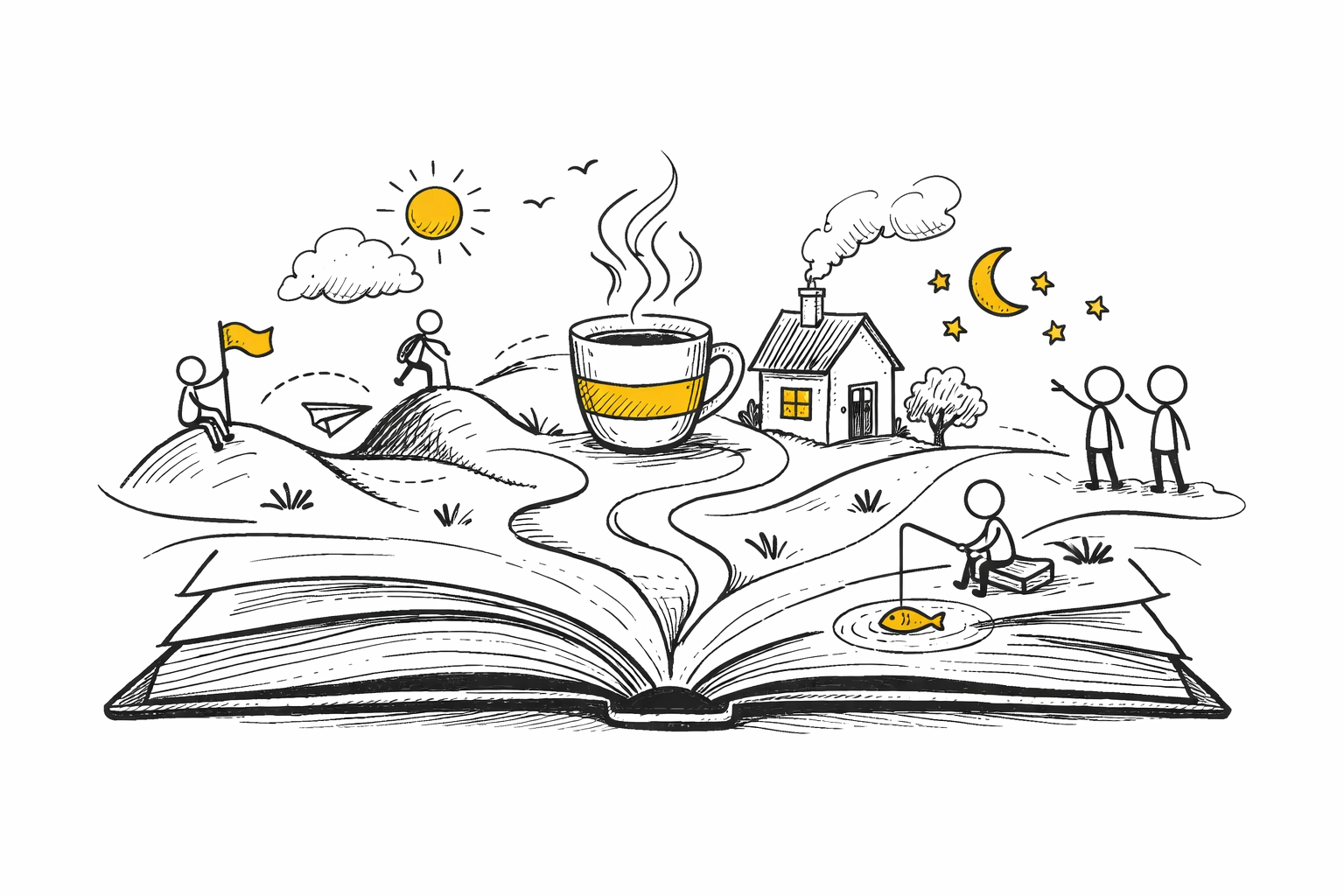
Here's a wild statistic: 92% of consumers want brands to make ads that feel like stories. And yet most marketing emails read like a quarterly earnings report written by someone who's never experienced joy.
Stories stick because they're how humans have processed information since we were drawing on cave walls. Numbers bounce right off our brains. Stories? They burrow in and set up camp.
What stories should you tell? Literally anything real:
- Customer success stories. Not boring case studies, actual "this product changed my Tuesday" moments.
- Behind-the-scenes team stuff. Show the humans behind the brand. Did your designer spill coffee on their keyboard again? Did your developer debug code at midnight fueled by questionable gas station snacks? We want the details.
- Serialized content. Build anticipation across multiple emails. Think mini-series, not one-offs.
- Founder/team narratives. Why did you start this thing? What keeps you going when everything's on fire?
The key is authenticity. Your stories don't need Hollywood-level drama. They just need to be true. People can tell the difference between "we value our customers" and "Janet from accounting brought homemade cookies today and now we're all in a sugar coma."
3. Nail Your Voice (And Actually Stick to It)
Quick test: If you removed your logo from your emails, would people still know they came from you? Or do they sound like they were generated by the same AI that writes LinkedIn motivational posts?
Your brand voice is the personality that comes through in every word. It's not just what you say, it's how you say it. And in 2026, when everyone has access to the same AI writing tools, having a distinctive voice is what separates "memorable brand" from "that company that sells… stuff?"
Here's how to lock in your voice:
- Create actual brand voice guidelines. Document what makes you you. Are you sarcastic? Earnest? Nerdy? Write it down so everyone's on the same page.
- Audit your automated flows regularly. That welcome sequence you set up in 2023? It might sound like it was written by a toaster. Refresh it.
- Read everything out loud. If it sounds weird coming out of your mouth, it'll sound weird in someone's inbox.
At 141 Creative, we're all about playful, human-centered content creation. That means we'd rather make you smirk than put you to sleep. Your voice should do the same, be so you that it's instantly recognizable.
4. Add Unmistakably Human Touches
Here's where you prove there's a real person behind the curtain. AI can write pretty well these days, but it still can't quite nail the things that make us human: humor, vulnerability, the occasional typo that makes it past spellcheck (okay, maybe don't do that one on purpose).
Ways to keep it human:
- Include real customer reviews and testimonials. Not the sanitized, PR-approved ones: the ones where people say things like "I was skeptical but this thing absolutely slaps."
- Share actual team photos. Not stock photos of attractive people laughing at salads. Real humans in their natural habitat.
- Write like you talk. Use contractions. Start sentences with "And" or "But." Break grammar rules when it serves the vibe. Your high school English teacher isn't grading this.
- Acknowledge when things go wrong. Shipment delayed? Server hiccup? Own it with honesty and humor instead of corporate-speak.
Before you hit send on any campaign, read it from your customer's perspective. Ask yourself: "Would I actually want to read this, or would I archive it faster than I swipe left on bad dating profiles?"
5. Choose Value Over Volume (And Actually Listen)
The fastest way to end up in the spam folder isn't having a sketchy subject line: it's being annoying. And nothing's more annoying than brands that treat your inbox like a billboard they rented for the month.
Quality over quantity means:
- Send emails that educate, entertain, or genuinely help. Not every email needs a "BUY NOW" button. Sometimes you can just be useful or interesting.
- Enable two-way communication. Invite replies. Ask questions. When someone responds, actually respond back (wild concept, right?).
- Match content to the customer journey. Someone who signed up yesterday doesn't need the same message as someone who's been with you for three years.
- Respect the unsubscribe. If someone wants out, let them go gracefully. Trying to guilt-trip them is like asking "are you sure?" seventeen times when someone wants to leave a party. Just… don't.
Think of your email list as a relationship, not a resource to be extracted. Would you text your friend seventeen times a day about sales? Would you only reach out when you need something? Exactly.
The Bottom Line: AI is Your Assistant, Not Your Replacement
Look, AI is incredibly useful for email marketing. It can optimize send times, segment audiences, A/B test subject lines, and handle the repetitive stuff that makes marketers want to fake their own deaths.
But AI can't replace the human insight, emotional intelligence, and creative spark that actually builds brands people care about. It's a tool, not a takeover.
So use it to make your life easier: but never let it strip away the warmth, personality, and genuine connection that keeps people actually wanting to hear from you.
Because in a world where everyone's emails are getting more automated, more optimized, and more "efficient," the brands that win are the ones that make people feel something other than the urge to hit delete.
Stay warm out there. Your inbox (and your customers) will thank you.
0 Comments